Sunday, July 18, 2010

Hello, Having a Great Summer!

Galveston, Texas

Kemp Ridley Sea Turtle


Hello!  I just realized I haven't posted on this blog for a month and a half!  Once my daughter finished the school year, somehow the time has flown by.  Where does it go?

She will be at camp this week, so I should be able to write reviews about the last 5 books I have read and write a bit about what I've been writing.

Have also been out of town (several times to Galveston, TX) and have had both sides of the family come and visit (not at the same time - my house isn't that big).  Please enjoy some pictures.

Friday, June 4, 2010

Gulf Oil Disaster

This blog is usually about books in some way, but I thought I would put up this widget about the Gulf Oil Disaster.  We all need to be informed, so we don't do this again.

Tuesday, May 25, 2010

Lament For A Maker by Michael Innes


Michael Innes, a talented and prolific author of British mystery novels, crafts Lament for a Maker well by dividing it into seven sections from the viewpoints of five different characters (two characters have two sections) who, bit by bit, reveal a haunting, intriguing, and beguiling tale of truth and deceit.

This mystery involves an eccentric old lord-of-the-manor type generally called "Guthrie."  He is the last in a long line of Guthrie's, lesser lords who have reigned over the area around Kinkeig, Scotland since feudal times until today from their Castle Erchany.  The question surrounds the present Guthrie's sudden death from a fall from the magnificent, medieval tower at Erchany in the middle of a relentless snowstorm on Christmas eve.

In the first section, Innes masters, at least according to this American reviewer, a certain local Scottish dialect.  If there is a difficult part of the book to read, this would be it.  However, much like reading a foreign language, I gradually became used to the unfamiliar vocabulary.  Innes has many more teasing plot twists and delicious descriptions after the first narrator, so keep on reading.  I found the journey through the facts and fiction to the finale quite satisfying.  This was my first Inspector Appleby Mystery and I plan to read more.

Title:  Lament For A Maker
Author:  Michael Innes
Publisher:  House of Stratus
Copyright:  2001
ISBN:  1-84232-741-0

Tuesday, May 18, 2010

Wannabe Writers #16

Wannabe Writers is a writing group for the un-published and anyone is welcome to join. This meme is sponsored by Sarah Darlington at Confessions of the Un-Published. It's a place where future authors can ask questions, share stories, and get feedback. Click (here) to find more about how it works.  This is my first Wannabe Writer post.  I hope it is helpful and interesting.


Where I am in the writing process:  I just declared myself officially as a writer at the beginning of this month, May 2010.  I have several ideas written down in my writing notebook.  I haven't actually started writing except for a possible first sentence in one project and lots of notes for another.  The notes are coming from research.  I'm writing non-fiction magazine articles for children and hope to write a non-fiction book for kids as well.  As far as novels go, I think that my love of history will lead me to write historical fiction.

Current problems:  I am also a new blogger and am having so much fun getting to know everyone in the reading/writing/reviewing blog world.  I think I need to start spending more time writing yet I'm learning so much through your blogs.  Perhaps I need to find the right balance between the various activities involved in writing such as networking, marketing, brainstorming, researching, note taking, writing, revising, querying, and the list goes on and on.  Does anyone have a handle on this?

Question of the Week:  How to start a story. I've never been very good a writing hooks. Any suggestions? How did you start your story? (Dialogue, description, action, etc.)

I decided to read everyone's Wannabe Writer #16 posts first to help me think.  I started commenting after reading some and came to the conclusion that different writers have different ways of starting a story.  Even the same writer started different stories differently.  Some plan and revise very carefully sometimes and others have the opening come to them sometimes spontaneously although perhaps not unexpectedly.

I like the idea of the "hook."  I've heard journalists are taught the hook from early on.  It seems to make sense that a writer must grab and hold a reader's attention.  The word motivation comes to mind.  A reader must have a compelling motive to want to read on.  How does a writer motivate a reader to keep reading?  One way might be to give the reader some astounding, shocking, or other attention grabbing bit of information, but then hint at the fact there is much more to know and understand, and he/she won't be satisfied or happy in life unless that "more" is discovered.  I think page-turner authors create this forward, catalytic (sp?) motion not just at the beginning but also at other key points in their works.

Teaser Tuesdays - My Other Half

I haven't written a Teaser Tuesday in awhile, so I have a bit of time and thought I would submit one today.  There is a special reason I am quoting My Other Half:  it was written by a sophmore who attends our local high school. 


Teaser Tuesdays is a bookish meme hosted by MizB at Should Be Reading. Anyone can play along! Just do the following.
  • Grab your current read
  • Turn to a random page  
  • Share two "teaser" sentences from somewhere on that page
  • Be careful not to include spoilers that give away something that would ruin the book for others  
  • Share the page, title, and author so that other TT participants can put the book on their TBR list if they like your "teasers"
Please leave a COMMENT here and leave a link to your own Teaser Tuesdays post, or share your 2 "teasers" in a comment here if you don't have a blog. Thanks!

My Teasers:

Her right half of the body shone with unnatural light.
It was made of pure metal, nothing else.

 
My Other Half by Gracie C. Qu,  p. 1

Wednesday, May 12, 2010

The Book Thief by Markus Zusak


I liked The Book Thief: however, I had heard so many good things about it and my expectations had been set so high that when I actually read it,  I was a little disappointed.  I'm not certain whether I would have been let down had I not listened to all the hype.  Perhaps.  Perhaps not.

Without giving too much away, I liked that the main character was bright, female, and strong.  (No, this isn't a book about feminism at all.)  The time is World War II in Nazi Germany, so unless a person towed the party line flawlessly (and even if a person did), strength of character and keen intelligence was essential to survive.

Perhaps, there are two main characters.  The narrator is so everpresent and full of unemotional commentaries that a reader knows he is always there whether remembered or not.  The point of view of the narrator fits the historical context well.  A reader would expect him to be there lurking about.  I would have expected the narrator though to be a bit more aggressive, but he seems lazy and almost bored with his plight doing what he must like someone stuck in one of the levels in Dante's hell.

The perseverance of the secondary characters (who were also prominent in the book so as to be not so secondary) also appealed to me.  The sheer inhumanity of the times brought out the innermost soul of a person, and these characters do not disappoint.  I would have preferred that Zusak had developed some of the characters who were Nazi supporters a little more however.

Definitely this is a book to read.  Expect to be surprised, shocked, and challenged, but is it as great of a work as some that have withstood the test of time like the accolades would lead a reader to believe?  I'm no so sure.  Zusak's book is riveting and intriguing, though, and I don't want to end on a negative note.  I did like the book and would read it again.

The Life and Writings of the Historical Saint Patrick


In The Life and Writings of the Historical Saint Patrick, R. P. C. Hanson has written a detailed, historical Introduction. He has also translated and commented upon the two existing works, The Letter to Coroticus and The Confession, composed by St. Patrick himself.

In the three-part Introduction, Hanson puts St. Patrick's writings in context so a reader can more easily understand the era during which Patrick lived, the importance of his work, and the man himself.  The Letter to Coroticus and The Confession at times speak clearly and at others, a reader wonders about Patrick's meaning.  Hanson's commentaries fill in more historical background of the times, events in Patrick's life, and aspects of Patrick's personality to assist the reader in comprehending the two surviving written documents.

I had read The Letter to Coroticus and The Confession before without commentary.  Much of the writing is straight-forward;  however, the overall context in which Patrick wrote was missing.  Thus, I missed much of the meaning behind the words.  For anyone interested in finding out who St. Patrick really was, as opposed to the legends about him, I recommend reading the two works without comments first, decipher what's possible, and then read them again with contextual commentaries.  R. P. C. Hanson knows what he is talking about as an expert on the history of the Celtic church, as Professor of Theology at the University of Manchester, and as Assistant Bishop of Manchester (at the time of publication).

Title:  The Life and Writings of the Historical Saint Patrick
Primary Source Author: Saint Patrick
Author of Introduction and Translater:  R. P. C. Hanson
Publisher:  The Seabury Press
Copyright: 1983
ISBN #:  0-8164-0523-9

Page a Day Update

This is my first page a day update.  It's the first day I can actually show some of my writing if blogs count.  I hope they do, because I may use some of my Ireland posts from yesterday for a magzine article or perhaps a children's book about St. Patrick.

I hope you enjoy the pictures as well as the words.

Tuesday, May 11, 2010

Pictures and History of the Rock of Cashel (put together by me to tell about more Saint Patrick Legends)


The Rock of Cashel is the plateau of rock under these medieval ruins,
 also known as St. Patrick's Rock
Located in southeast Ireland, Cashel, County Tipperary


Cashel Rock again, Cashel is the anglicized version of an
Irish word meaning "fortress" or "stone fort" which explains why
this plateau of rock is also known as Cashel of the Kings.


Rock of Cashel,  Legend says at this site in 432 A.D., St. Patrick
baptised King Aengus, a King of Munster who became
Ireland's first Christian ruler

During the baptism, legend also has it that St. Patrick used the 3 leafed
shamrock (clover) for the first time to explain the
Christian concept of the Trinity.

 
Also, it is said that during the baptism, the devil flew over Ireland and
ran into the Slieve Bloom Mountains. 

Then,Satan took an enormous bite
out of the stonypeaks and spat out his massive mouthful and formed
the Rock of Cashel. 
 
This also explains a gap in the Slieve Bloom Mountains
north of the Rock called the Devil's Bit


The first structure to be built on the Rock of Cashel was
the Tower.  It is 90 feet tall and built after a
King of Munster gave the rock plateau to the church in 1101 A. D.


The second building, Cormac's chapel,
a unique Romanesque church, was finished in 1134
for King Cormac III


St. Patrick's Cathedral was finished in 1270 A. D. on the Rock of Cashel.

Ireland's Saint: The Essential Biography of Saint Patrick

St. Patrick was said to explain the Trinity with a 3 leaf clover.


Hore Abbey, Cashel, Ireland
Many monestaries and abbeys were organized
directly or indirectly because of
St. Patrick's influence.


Kylemore Abbey, County Mayo


Ireland's Saint:  The Essential Biography of St. Patrick was first published in 1905 as The Life of St. Patrick and His Place in History.  The latter was written by John Bagnell Bury, a turn of the century Irish historian.  The book discussed in this review is the former written by J. B. Bury and edited by Jon M. Sweeney.  Sweeny also wrote the Introduction and compiled the annotations.  Ireland's Saint developed into "the most influential study of the saint ever written up until this point,"  according to Sweeney.  He also says Bury went against some scholars' traditional views of St. Patrick, yet is also "sympathetic to the tradition and legends surrounding the saint."  Today's scholars mainly believe, states Sweeney, that the only true sources from which to obtain facts about St. Patrick's life are The Confession and The Letter to Coroticus, the two existing works written by St. Patrick himself.

Bury describes St. Patrick's life very thoroughly.  Bury tells about stories from the legends and then refutes many of them.  A reader might expect Bury's writing to be scholarly.  His biography does contain much analysis, but his words seem fairly clear, though, if not a bit long-winded.  Sweeney inserts updates by more recent scholars throughout the book in columns set beside the text.  He also expands explanations and adds more information to make the work more accessible to any reader.

I would definitely recommend reading this book to start with if interested in St. Patrick.  I would also recommend reading other more recently published biographies.  It might also be interesting to read books that tell St. Patrick's story as the people in the Middle Ages might have known him legends and all.

Title:  Ireland's Saint:  The Essential Biography of St. Patrick
Author:  J. B. Bury
Editor:  Jon M. Sweeney
Publisher:  Paraclete Press
Copyright:  2008
ISBN:  13: 978-1-55725-557-0

How The Irish Saved Civilization by Thomas Cahill


Monastery of Clonmacnoise (Cluain Mhic Nois)
meaning Meadow of the Sons of Nos

Founded by Ciaran of Clonmacnoise in 545 A.D.

Located in the central part of today's
Republic of Ireland
South of Athlone on the River Shannon
in County Offaly

High Kings of Tara and Connacht were buried here.
Became Important center of learning during its time

Cross of the Scripture, Clonmacnoise

Thomas Cahill asserts  in How the Irish Saved Civilization that the Irish Christian monks, by sequestering and copying a vast and wide-ranging collection of written works, preseved what became the basis of Western Civiliztion as we know it today.  Without these manuscripts from our Greco-Roman and Judeo-Christian heritage, Cahill claims, we would not have experienced the immeasurably strong influence of Aristotle and Plato, Augustine of Hippo and Constantine, Abraham and Moses, Paul and the disciples, and even Jesus in the development of our culture.

Cahill discusses the time between the fall of Rome and the rise of Medeival Europe with flair, flamboyance, and humor.  As the barbarians tribes invaded and conquered the Roman Empire in the early 5th century, they, unfortunately, also also succeeded in destroying many books with which we could have understood our past even better.  Many manuscripts were saved, however, and were hidden in safe places.  The cloisters of the monestaries in Ireland served as these havens, because Ireland was so remote from the continent.  Rome had even thought it not worth the trouble to travel to the northern island to add it to the Roman Empire.

I would highly recommend this book and others by Thomas Cahill.  His views can be controversial, but his ideas are so thought provoking, his descriptions so vivid, and his storytelling so riveting, anyone, not just history buffs, would thoroughly enjoy and deeply ponder all of these aspects. 

The audio recording narrated by Donal Donnelly is also an absolute must to experience.  He makes Cahill's already lively words come alive even more.  With Donnelly's exquisit accent and boundless expressiveness, a listener is convinced she is hearing a Shakespeare play rather than listening to boring old history.  Even laughing out loud is not an uncommon happening while absorbing this recording.

Title:  How the Irish Saved Civilization
Author:  Thomas Cahill
Publisher:  Hodder and Stoughton
Copyright:  1995
ISBN #:  978-0-340-63787-6

Catching Up on Ireland

Today I am catching up with book reviews of the many books I've been reading.  I've fallen a bit behind in the 52 books in 52 weeks challenge, but hope to become current by the end of the afternoon.

Books about Saint Patrick and Ireland have interested me a great deal, and I'm so glad to have finally read some of them.  I still have a few more on my bookshelf to go.

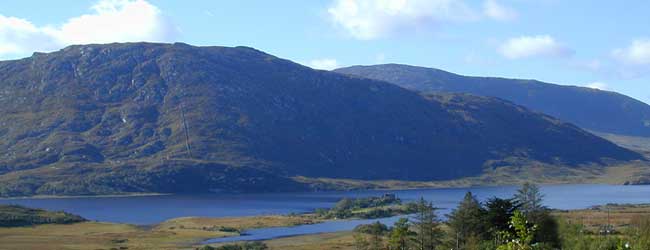
Here are a few photos from various places in Ireland to set the mood.


Benbulbin

Beltany Stone Circle

Glengesh Pass

Slieve League Cliffs


Tuesday, May 4, 2010

Joined Page A Day Challenge


I've decided to join Swimmer's writing challenge.  You can find her at Books, Writing, and More, Oh My!!

GOAL:  to write one page each day

TIME SPAN:  May 6 - June 30

WHY:  a very reachable goal

WHAT YOU NEED TO DO:  go to Books Writing, and More, Oh My!!  and follow the directions

Hope you can join us too.  My updates will be here periodically and I'll comment on Swimmer's website too.  See you around.

Monday, May 3, 2010

First Day as a Writer

Today, May 3, 2010, is the first day I'm going to officially call myself and be a writer.  I have been published in magazines before; however, I was just writing now and then when it fit my schedule.  Today (did I say for the first time), I'm starting a regular schedule.  On my calendar, it actually says from 10:00am - 2:00pm,  I am going to write.  (Does blogging count?)  Writing this brief announcement blog is what I consider the first step of my wrtiting career. 

I'm also going to spend a few minutes looking for a picture that I would like to include with this writing career announcement post so that I can have an image in mind.  I think this will help me feel like a writer.  (Does psychological or mental preparation count as writing?)

So far I have two writing project ideas.  I know which one I would like to start with.  But, for some reason, my computer won't connect to the Internet.   I'm using my daughter's computer right now.  It just doesn't have a printer attached.  I was going to and hopefully still will do a little background reserach.  (Does researching count as writing?)  My style is to prepare, research, outline, prepare some more and then the actual writing doesn't take that long.

Also, I like to read the reader/writer/agent/editor blogs I've been following to keep up on issues and news in the business.  (Does marketing research count as writing?)

I'd better wind this up quick or I won't even actually "write" one word toward my first project today which is my untimate goal to do by 2:00pm.  Wish me the best.  Here I go.

Sunday, April 25, 2010

The Three Cities Trilogy: Lourdes, Complete by Emile Zola

Emile Zola wrote Lourdes as the first book of The Three Cities Trilogy in 1894.  The French flock to Lourdes in this story because of their faith in God.  Some travel there as pilgrims to strengthen their faith through the journey and by helping  the sick.  Many more have serious illnesses and go to Lourdes to be miraculously healed by divine intervention. 

Zola is known for his incredibly detailed descriptions and he does not disappoint in Lourdes.  On the white train, the one with the most afflicted of sufferers, Zola writes about the passengers in a few nearby cabins.  He describes the illnesses with exhaustive, uncomfortable scrutiny slowly one by one.  We meet the main patient, Marie, on the first page and begin to understand the unimaginable suffering that existed before modern medicine.  "Then her father helped her lie down again in the narrow box, a kind of wooden gutter, in which she had been living for seven years past."  Another "wretch," M. de Guersaint, describes his ailments, 'I was seized with sharp lightning-like pains, red-hot sword thrusts....in the muscles.'  La Grivotte tells of her pinings endlessly.

The doctors say I have one lung done for, and that the other one is scarcely any better.  There are great big holes you know.  At first I only felt bad between the shoulders and spat up some froth.  And then I got thin, and became a dreadful sight.  And now I am always in a sweat, and cough till I think I'm going to bring my heart up.  And I can no longer spit.  And I haven't the strength to stand, you see.  I can't eat.

The entire story takes place over five days, two on the train and three in Lourdes.  Zola divides the book into five sections, one for each day. Once in Lourdes, patients go from the hospitals to the Grotto, the holy place of healing, at certain times each day to pray and bathe in the healing stream waters.  A miracle is the only hope for many had no other option left but to face imminent death.  Many are healed throughout the weekend.  Others have been there for years in a row and yet, again, receive no cure.  Some die.

The most interesting aspect of this entire story is that it is based on truth.  People still flock to Lourdes for divine healing today.    Scholars see Zola's works including Lourdes as examples of French naturalism and socio-historical documents.  66 healing miracles have apparently been documented in Lourdes since the pilgrimages began in 1858..  Even Pope Benedict XVI traveled to Lourdes as a "messenger" of peace in 2008.  There must be something going on here.  Read the book and find out.

Wednesday, April 21, 2010

Wordless Wednesday


George the Chinchilla found in daughter's 5th grade science classroom.

I Am The Messenger

Ed is the main character in the young adult novel, I Am The Messenger, by Markus Zusak.  Ed is basically a guy who isn't going anywhere. He drives a cab and has three friends, but they are not that close or perhaps they are.  They just don't talk about anything too deeply or do they?  He is secretly in love with one of them; however, she, Audrey, stops herself from loving anyone because of an abusive childhood.

Ed finds himself face down and then running when he stops a bank from being robbed by shooting the bank robber.  The local paper shows his picture prominently and declares Ed as the one who saved the day.

Shortly after, Ed starts receiving Aces one by one from a deck of cards over several months.  He receives an Ace for each suit with three addresses or hints scrawled on each card about people he must help.  Ed must (and I mean must) decipher each situation in order to figure out who he needs to help and how to help each one.  Then, he must follow through and actually help, or in terms of the title, bring a message to that person.  Some assignments are easy and heart-rendering; others are dangerous and violent.

Ed thinks he's finished after completing the 12 orders.  Then, he recieves one more card and finds out that he may not be a messenger at all.

I Am The Messenger is another best-selling, award-winning book by Markus Zusak, also the author of The Book Thief.  I recommend it for teens and older as a book about finding out who you are and what you really can do in life.

Tuesday, April 20, 2010

Essentials for Life: Your Back to Basics Guide to What Matters Most

At first glance, Essentials for Life by Marcia Ford is what I would call a daily devotional book with 50 devotions.  But after a closer look, it is a book for thinking through life's most important questions.  Yes there are 50 topics, yet each question could take several days or longer of reading, rereading, thinking, rethinking, praying, and praying again in order to fully determine your true, heartfelt beliefs.

Essentials for Life, published by Thomas Nelson earlier this year, is not just a book to read: it is a book to ponder.  It is a book that leads you to other sources such as the Bible, other books, your heart, and of course, God.  For some readers, grappling with each question will lead to new answers and for others, to the reaffirmation of beliefs.

The book itself feels nice in your hands.  The cover isn't just like a normal paperback's; there is a softness and a sheen to it more like a treasured journal.  The pages inside also feel good on your fingers.  Essentials for Life comes in a handy size that is not too big or thick and would fit easily into a briefcase or purse.

The author uses a specific structure for each subject.  The first and third pages have a Bible verse and a quote or a short paragraph called, "Interesting to Note" in the right or left hand margins.  After the title on the first page, a brief statement of the question or issue appears.  On the second page, the writer includes a quote by an influential Christian, some of whom I have heard and some not.  The third page often has bullet points and the fourth has a box of  "do's" and "don'ts" called, "What's Essential."

Essentials for Life is a well-written, thoughtful, and sincere Christian resource.  I'm not certain I can keep track of 50 essentials.  Most books or articles that use numbers use the number 7 or 10.  Scientists have proved that our mind can contain these numbers of things for a longer period of time such as a phone number with or without the area code.  It's difficult to remember 50 questions let alone the answers.  Perhaps, the author could have boiled down these essentials to a number a human could get their arms around and remember.  It would be critical to go through this book and write all your thoughts and prayers in a journal, so that a reader could go back to what is was they decided, experienced, and believe about each question.

I would recommend this book for someone who has the patience to delve deeply about important issues in our lives and someone who would document his or her journey through the questions in Essentials for Life carefully.  The resulting journal would be valuable for the rest of the reader's life for personal reflection and for teaching any special wisdom found to others.

I received this book from the publishers through booksneeze.  All opinions are my own.
Teaser Tuesdays is a bookish meme hosted by MizB at Should Be Reading.  Anyone can play along!  Just do the following.


  • Grab your current read
  • Turn to a random page
  • Share two "teaser" sentences from somewhere on that page
  • Be careful not to include spoilers that give away something that would ruin the book for others
  • Share the page, title, and author so that other TT participants can put the book on their TBR list if they like your "teasers"
Please leave a COMMENT here and leave a link to your own Teaser Tuesdays post, or share your 2 "teasers" in a comment here if you don't have a blog. Thanks!

My Teasers:

Of course, I don't 'want' to go inside, but what other
choice do I have?  If someone's in there, there's
nothing I can do about it.

p. 341, I Am The Messenger , by Markus Zusak

Just A Personal Note and Wordless Wednesday (with words a day early)

I haven't ever put a personal note on my blog before, but I wanted to say to anyone who visits my blog in the next few days that this blog is mainly about book reviews and, soon to come, writing experiences.  However, if you look at the last few blogs I've posted, they are all memes.  I do memes for fun and to keep up the conversations with others, you know "network," or I really think of it as making and keeping book loving friends.  I also write memes when I don't have time to do any reviews.  In the past few weeks, I have been a reading fiend.  So come back to this blog in a few days, and you will see hopefully some diverse, interesting reviews.  Also, if you have the time, and want to see book reviews I've done, check out my older posts.  They are not that old since I started blogging in January 2010.  Thanks to anyone in advance who reads my blog. 

Here's a fun picture of Yen, the turtle, who lives in my daughter's 5th grade science class.  I guess it's a day early but a good photo for Wordless Wednesday.